Descrição do autor
Skill de agente para quando o próprio agente trava: fica repetindo a mesma ferramenta, queima token sem avançar, estoura limite de chamadas ou sai da tarefa original. Em vez de tentar de novo às cegas, ela impõe quatro fases: capturar o estado da falha num template fixo, classificar contra uma tabela de padrões conhecidos (loop sem saída, estouro de contexto, conexão recusada, cota esgotada, arquivo sumido depois da escrita, teste que continua falhando depois do conserto), aplicar a menor recuperação que muda o diagnóstico, e fechar com um relatório legível para o próximo agente ou para uma pessoa. Vem do repositório affaan-m/ECC, que estava no topo do GitHub Trending em 7 de setembro de 2026 e é distribuído sob licença MIT. Como usar: salve como SKILL.md em ~/.claude/skills/agent-introspection-debugging/ (ou a pasta de skills da sua ferramenta), mantendo o cabeçalho YAML, e acione quando uma execução falhar mais de uma vez. O que eu testei: apliquei no Claude Opus 5 sobre uma falha real desta própria sessão, em que eu chamei o gerador de imagem três vezes seguidas e tomei o mesmo erro de limite diário. A skill classificou como cota esgotada, apontou que eu estava exatamente no padrão ruim que ela descreve, repetir a mesma ação com palavras diferentes, e mandou verificar o estado do mundo antes de confiar na memória. Foi o que resolveu: em vez de assumir que o limite continuava valendo, testei o gerador de novo no dia seguinte e ele tinha voltado. O que mudei em relação ao original: troquei aspas curvas por aspas retas. Não tem travessão e não depende de nenhum arquivo externo. Ela cita outras skills do mesmo repositório no fim, que são opcionais.
O pacote
Instalar esta skill
npx copyprompt-cli add agent-introspection-debugging-o-agente-diagnostica-a-propria-falha-antes-de-tentO comando imprime o pacote inteiro e pergunta antes de escrever qualquer coisa. Nada é instalado até você ler e responder que sim.
Precisa de uma chave de API de conta com e-mail confirmado: rode `npx copyprompt-cli login` uma vez e cole uma chave de Configurações.
SKILL.mdagent-introspection-debuggingAgent Introspection Debugging
Use this skill when an agent run is failing repeatedly, consuming tokens without progress, looping on the same tools, or drifting away from the intended task.
This is a workflow skill, not a hidden runtime. It teaches the agent to debug itself systematically before escalating to a human.
When to Activate
- Maximum tool call / loop-limit failures
- Repeated retries with no forward progress
- Context growth or prompt drift that starts degrading output quality
- File-system or environment state mismatch between expectation and reality
- Tool failures that are likely recoverable with diagnosis and a smaller corrective action
Scope Boundaries
Activate this skill for:
- capturing failure state before retrying blindly
- diagnosing common agent-specific failure patterns
- applying contained recovery actions
- producing a structured human-readable debug report
Do not use this skill as the primary source for:
- feature verification after code changes; use
verification-loop - framework-specific debugging when a narrower ECC skill already exists
- runtime promises the current harness cannot enforce automatically
Four-Phase Loop
Phase 1: Failure Capture
Before trying to recover, record the failure precisely.
Capture:
- error type, message, and stack trace when available
- last meaningful tool call sequence
- what the agent was trying to do
- current context pressure: repeated prompts, oversized pasted logs, duplicated plans, or runaway notes
- current environment assumptions: cwd, branch, relevant service state, expected files
Minimum capture template:
## Failure Capture
- Session / task:
- Goal in progress:
- Error:
- Last successful step:
- Last failed tool / command:
- Repeated pattern seen:
- Environment assumptions to verify:
Phase 2: Root-Cause Diagnosis
Match the failure to a known pattern before changing anything.
| Pattern | Likely Cause | Check |
| --- | --- | --- |
| Maximum tool calls / repeated same command | loop or no-exit observer path | inspect the last N tool calls for repetition |
| Context overflow / degraded reasoning | unbounded notes, repeated plans, oversized logs | inspect recent context for duplication and low-signal bulk |
| ECONNREFUSED / timeout | service unavailable or wrong port | verify service health, URL, and port assumptions |
| 429 / quota exhaustion | retry storm or missing backoff | count repeated calls and inspect retry spacing |
| file missing after write / stale diff | race, wrong cwd, or branch drift | re-check path, cwd, git status, and actual file existence |
| tests still failing after "fix" | wrong hypothesis | isolate the exact failing test and re-derive the bug |
Diagnosis questions:
- is this a logic failure, state failure, environment failure, or policy failure?
- did the agent lose the real objective and start optimizing the wrong subtask?
- is the failure deterministic or transient?
- what is the smallest reversible action that would validate the diagnosis?
Phase 3: Contained Recovery
Recover with the smallest action that changes the diagnosis surface.
Safe recovery actions:
- stop repeated retries and restate the hypothesis
- trim low-signal context and keep only the active goal, blockers, and evidence
- re-check the actual filesystem / branch / process state
- narrow the task to one failing command, one file, or one test
- switch from speculative reasoning to direct observation
- escalate to a human when the failure is high-risk or externally blocked
Do not claim unsupported auto-healing actions like "reset agent state" or "update harness config" unless you are actually doing them through real tools in the current environment.
Contained recovery checklist:
## Recovery Action
- Diagnosis chosen:
- Smallest action taken:
- Why this is safe:
- What evidence would prove the fix worked:
Phase 4: Introspection Report
End with a report that makes the recovery legible to the next agent or human.
## Agent Self-Debug Report
- Session / task:
- Failure:
- Root cause:
- Recovery action:
- Result: success | partial | blocked
- Token / time burn risk:
- Follow-up needed:
- Preventive change to encode later:
Recovery Heuristics
Prefer these interventions in order:
- Restate the real objective in one sentence.
- Verify the world state instead of trusting memory.
- Shrink the failing scope.
- Run one discriminating check.
- Only then retry.
Bad pattern:
- retrying the same action three times with slightly different wording
Good pattern:
- capture failure
- classify the pattern
- run one direct check
- change the plan only if the check supports it
Integration with ECC
- Use
verification-loopafter recovery if code was changed. - Use
continuous-learning-v2when the failure pattern is worth turning into an instinct or later skill. - Use
councilwhen the issue is not technical failure but decision ambiguity. - Use
workspace-surface-auditif the failure came from conflicting local state or repo drift.
Output Standard
When this skill is active, do not end with "I fixed it" alone.
Always provide:
- the failure pattern
- the root-cause hypothesis
- the recovery action
- the evidence that the situation is now better or still blocked
SKILL.md5.6 KB
---
name: agent-introspection-debugging
description: Structured self-debugging workflow for AI agent failures using capture, diagnosis, contained recovery, and introspection reports. Use when an agent run fails and you need a reproducible diagnosis instead of a retry.
metadata:
  origin: ECC
---

# Agent Introspection Debugging

Use this skill when an agent run is failing repeatedly, consuming tokens without progress, looping on the same tools, or drifting away from the intended task.

This is a workflow skill, not a hidden runtime. It teaches the agent to debug itself systematically before escalating to a human.

## When to Activate

- Maximum tool call / loop-limit failures
- Repeated retries with no forward progress
- Context growth or prompt drift that starts degrading output quality
- File-system or environment state mismatch between expectation and reality
- Tool failures that are likely recoverable with diagnosis and a smaller corrective action

## Scope Boundaries

Activate this skill for:
- capturing failure state before retrying blindly
- diagnosing common agent-specific failure patterns
- applying contained recovery actions
- producing a structured human-readable debug report

Do not use this skill as the primary source for:
- feature verification after code changes; use `verification-loop`
- framework-specific debugging when a narrower ECC skill already exists
- runtime promises the current harness cannot enforce automatically

## Four-Phase Loop

### Phase 1: Failure Capture

Before trying to recover, record the failure precisely.

Capture:
- error type, message, and stack trace when available
- last meaningful tool call sequence
- what the agent was trying to do
- current context pressure: repeated prompts, oversized pasted logs, duplicated plans, or runaway notes
- current environment assumptions: cwd, branch, relevant service state, expected files

Minimum capture template:

```markdown
## Failure Capture
- Session / task:
- Goal in progress:
- Error:
- Last successful step:
- Last failed tool / command:
- Repeated pattern seen:
- Environment assumptions to verify:
```

### Phase 2: Root-Cause Diagnosis

Match the failure to a known pattern before changing anything.

| Pattern | Likely Cause | Check |
| --- | --- | --- |
| Maximum tool calls / repeated same command | loop or no-exit observer path | inspect the last N tool calls for repetition |
| Context overflow / degraded reasoning | unbounded notes, repeated plans, oversized logs | inspect recent context for duplication and low-signal bulk |
| `ECONNREFUSED` / timeout | service unavailable or wrong port | verify service health, URL, and port assumptions |
| `429` / quota exhaustion | retry storm or missing backoff | count repeated calls and inspect retry spacing |
| file missing after write / stale diff | race, wrong cwd, or branch drift | re-check path, cwd, git status, and actual file existence |
| tests still failing after "fix" | wrong hypothesis | isolate the exact failing test and re-derive the bug |

Diagnosis questions:
- is this a logic failure, state failure, environment failure, or policy failure?
- did the agent lose the real objective and start optimizing the wrong subtask?
- is the failure deterministic or transient?
- what is the smallest reversible action that would validate the diagnosis?

### Phase 3: Contained Recovery

Recover with the smallest action that changes the diagnosis surface.

Safe recovery actions:
- stop repeated retries and restate the hypothesis
- trim low-signal context and keep only the active goal, blockers, and evidence
- re-check the actual filesystem / branch / process state
- narrow the task to one failing command, one file, or one test
- switch from speculative reasoning to direct observation
- escalate to a human when the failure is high-risk or externally blocked

Do not claim unsupported auto-healing actions like "reset agent state" or "update harness config" unless you are actually doing them through real tools in the current environment.

Contained recovery checklist:

```markdown
## Recovery Action
- Diagnosis chosen:
- Smallest action taken:
- Why this is safe:
- What evidence would prove the fix worked:
```

### Phase 4: Introspection Report

End with a report that makes the recovery legible to the next agent or human.

```markdown
## Agent Self-Debug Report
- Session / task:
- Failure:
- Root cause:
- Recovery action:
- Result: success | partial | blocked
- Token / time burn risk:
- Follow-up needed:
- Preventive change to encode later:
```

## Recovery Heuristics

Prefer these interventions in order:

1. Restate the real objective in one sentence.
2. Verify the world state instead of trusting memory.
3. Shrink the failing scope.
4. Run one discriminating check.
5. Only then retry.

Bad pattern:
- retrying the same action three times with slightly different wording

Good pattern:
- capture failure
- classify the pattern
- run one direct check
- change the plan only if the check supports it

## Integration with ECC

- Use `verification-loop` after recovery if code was changed.
- Use `continuous-learning-v2` when the failure pattern is worth turning into an instinct or later skill.
- Use `council` when the issue is not technical failure but decision ambiguity.
- Use `workspace-surface-audit` if the failure came from conflicting local state or repo drift.

## Output Standard

When this skill is active, do not end with "I fixed it" alone.

Always provide:
- the failure pattern
- the root-cause hypothesis
- the recovery action
- the evidence that the situation is now better or still blocked
Comentários (0)
Ainda não há comentários. Testou o prompt? Conte como foi!
Entre para comentar
Prompts relacionados
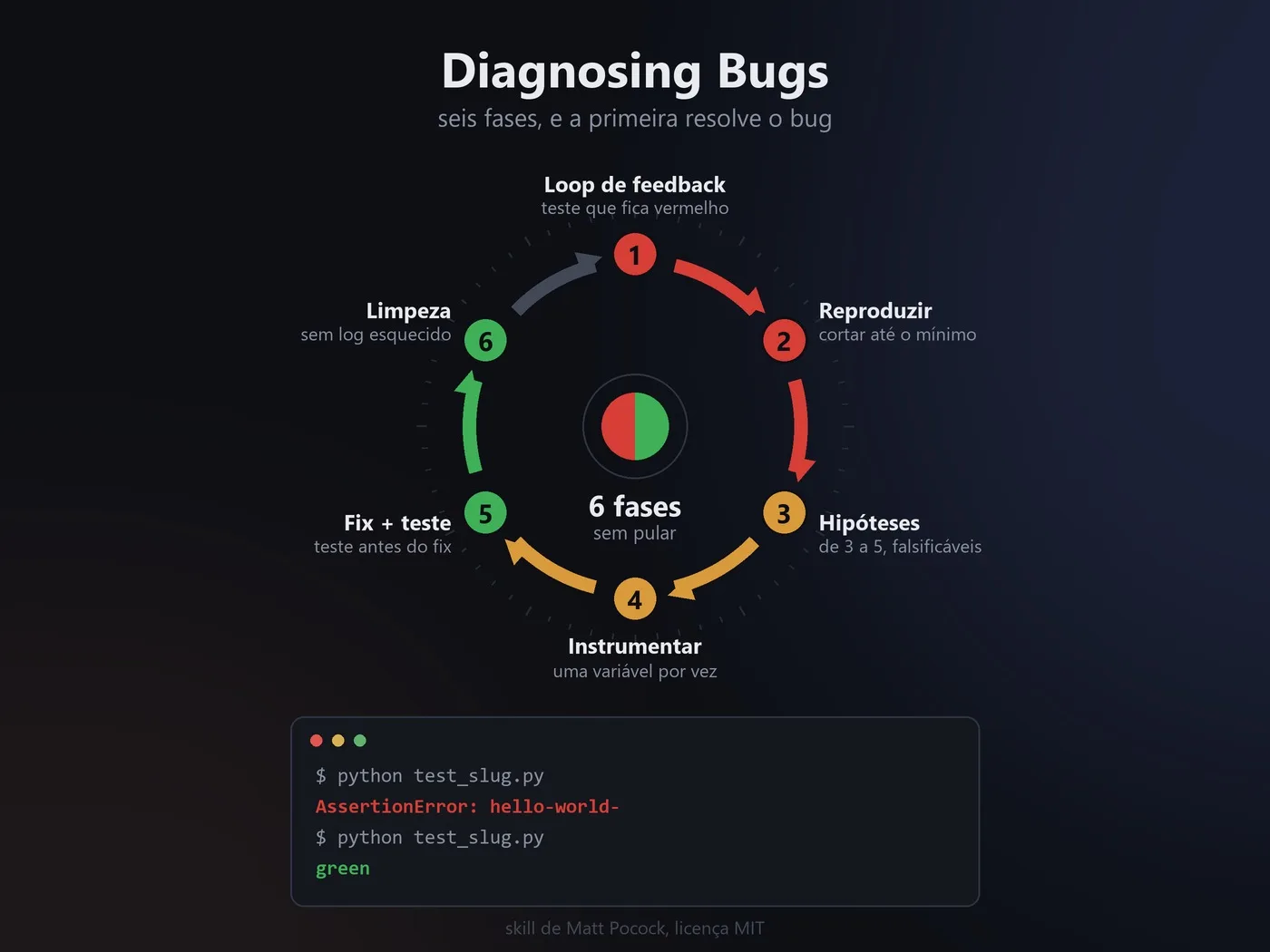
Diagnosing Bugs: loop de diagnóstico para bugs difíceis (skill de Matt Pocock)


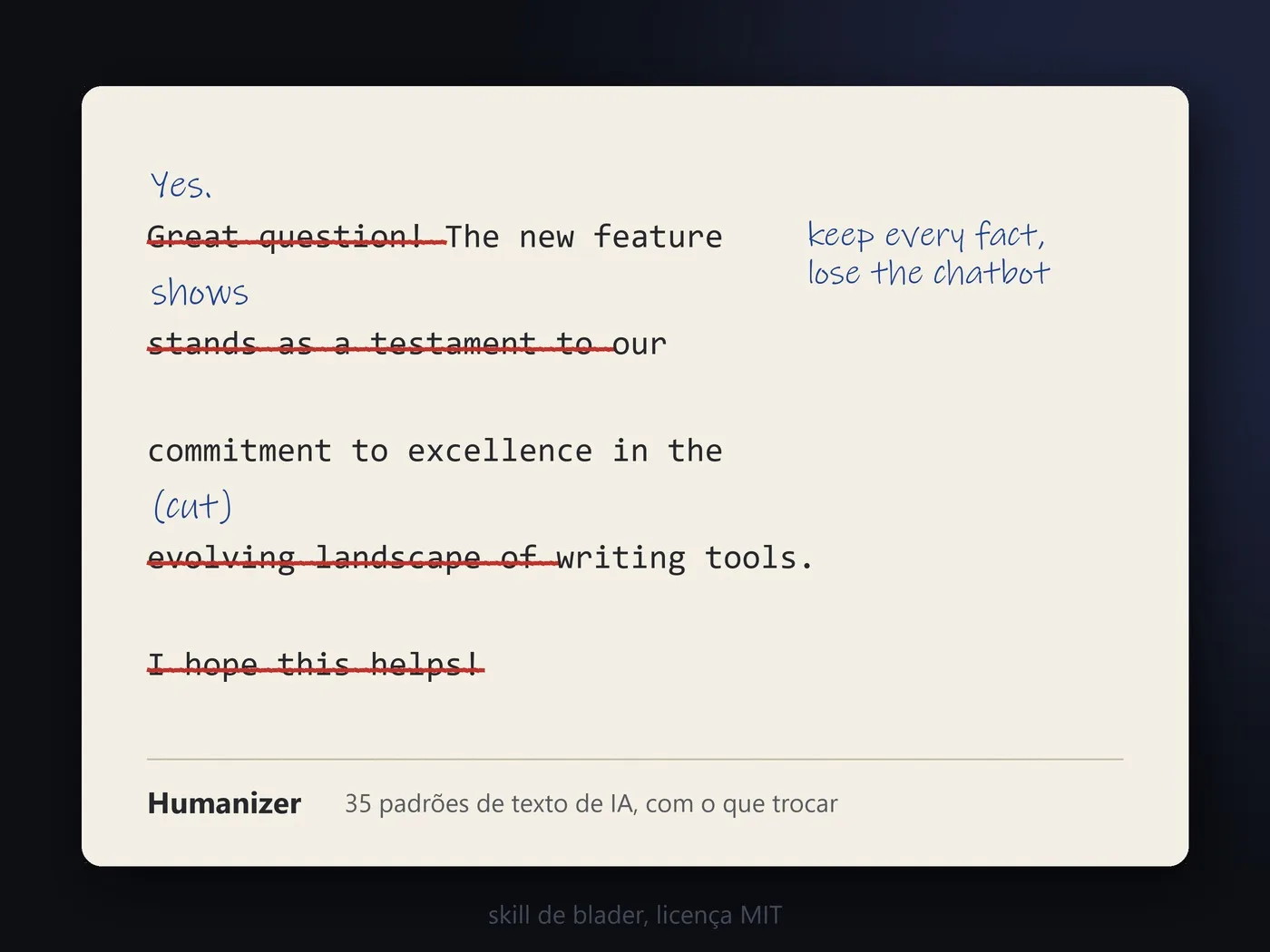
Humanizer: remover padrões de texto de IA sem mudar o que o texto diz (skill de blader)
croWhen the user wants to optimize, improve, or increase conversions on any marketing page or form, including homepage, landing pages, pricing pages, feature pages, lead capture forms, or contact forms. Also use when the us